Leave Your Message
0%

Potassium Humate is something farmers often use in agriculture as a source of humic substances and potassium. You’ll usually see it applied directly to the soil or added through irrigation, but it really depends on what the product label says and what kind of equipment you have. If you're dealing with soil that needs help with structure, nutrient availability, or root growth, this might be something to consider. It usually shows up as dark flakes, powder, or sometimes liquid. But just because it looks a certain way doesn’t necessarily tell you how good or effective it is. Since different products can vary a lot in what’s inside, always take a look at the analysis and follow the application instructions carefully.

Humic substances, including Potassium Humate, can interact with minerals and organic matter in your soil. How well it works really depends on factors like your soil type, what crops you’re growing, the weather, and your overall management practices. For example, if you're working with compacted soil, you might see different results compared to someone managing sandy ground—it’s a pretty important difference to keep in mind. Just so you know, Potassium Humate isn’t a complete fertilizer; it’s not meant to replace a balanced nutrient plan. Using soil tests and observing your crops can really help you decide when and how much to apply, and avoid wasting money on unnecessary treatments.

If you’re thinking about using it, make sure to compare the guaranteed analysis, solubility, and recommended application rates before buying. It’s also a good idea to keep notes on when you apply it, how it affects your irrigation, and how your crops respond. Setting up small trial strips in your fields can give you some useful insights. Be cautious if you see claims of huge yield increases—they’re often not a one-size-fits-all kind of thing. Even the best trials can be tricky to interpret if the weather or other inputs change unexpectedly. Overall, Potassium Humate can be a helpful tool in soil management, but its true value really depends on your local conditions and real results, not just what you hear or assume.”
Why Is Potassium Humate Used in Agriculture?

What Potassium Humate Is

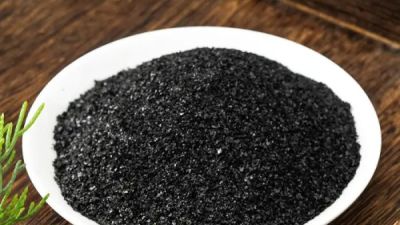
Potassium humate is a potassium salt of humic substances formed as plant and other organic matter breaks down over time. It is usually dark brown to black and may dissolve in water, depending on how it was processed. Potassium Humate Powder is a dry form that growers can mix with water or blend into certain soil applications. Its exact composition varies with the source material and manufacturing method, so products are not always interchangeable.

Tips: Check the product label for solubility and application directions. Start with a small area. Avoid assuming that a darker solution means a stronger product.

In agriculture, potassium humate is used as a soil amendment, not as a complete fertilizer. It supplies some potassium, while humic compounds may support soil structure and nutrient interactions. Results depend on soil type, crop, weather, and application rate. A grower might test it on a short bed before treating an entire field. It is not a magic fix, and evidence can be mixed across conditions. Soil testing and careful observation matter more than broad promises.

How Potassium Humate Interacts with Soil

Why Is Potassium Humate Used in Agriculture?

How Potassium Humate Interacts with Soil

Potassium humate dissolves in water and carries humic substances into the root zone. These compounds interact with soil particles and dissolved nutrients. In some soils, they help small particles form more stable aggregates. Better aggregation can leave tiny pores for water and air. The change is gradual, not dramatic. A crumbly surface after irrigation is useful, but it does not prove humate caused it.

Humic substances can bind certain nutrients, including iron and zinc, and may affect how readily plants access them. They can also help reduce nutrient loss in some conditions. Results depend on soil texture, pH, organic matter, crop, and application rate. Potassium humate is not a replacement for balanced fertilizer or sound soil management. Too much of any amendment may waste money, and the response can be hard to separate from weather or other inputs. A soil test gives a more dependable starting point. Small field comparisons can help growers judge whether treated rows actually differ in rooting, moisture, or growth. Be cautious with broad claims; soil is variable.

How It Helps Plants Access Nutrients

In cropped soils, nutrients can be present yet difficult for roots to acquire. Phosphorus may bind with iron or calcium, while some micronutrients become less available as soil pH rises. Soluble Potassium Humate supplies potassium and dissolved humic substances that interact with soil minerals and root surfaces. These interactions may help keep certain nutrients available near roots and support fine-root growth. More fine roots can mean more contact with moist soil. The response depends on the soil and crop. No shortcut here.

Rose et al. reported average increases of 22% in shoot dry weight and 21% in root dry weight across studies reviewed in their 2014 meta-analysis in Advances in Agronomy. Those figures describe responses to humic-substance treatments, not guaranteed field gains from potassium humate. Results varied with the humic source, dose, plant species, and growing conditions. I would not read those averages as a promise. In practice, compare treated and untreated strips, and track soil-test results and crop growth. That makes it easier to see whether nutrient access improved on your own fields.

Why Is Potassium Humate Used in Agriculture? — How It Helps Plants Access Nutrients

Soil or Plant Factor How Potassium Humate May Help What This Means for Nutrient Access Practical Consideration
Micronutrients
Iron, zinc, copper, and manganese
Humic substances contain functional groups that can bind metal ions and influence their movement and solubility in soil. In some soils, this can help keep certain micronutrients in forms that are more available for root uptake. The effect depends on soil pH, nutrient levels, product properties, and application method.
Phosphorus Humic substances can interact with soil minerals and may affect phosphorus sorption and availability. These interactions may influence how readily plants can access soil phosphorus; results are not uniform across soil types. Potassium humate does not replace a phosphorus fertilizer when soil tests show a phosphorus deficiency.
Nutrient retention and movement Added organic matter from humic products can contribute to soil properties that influence water and nutrient movement. Improved soil conditions may support more effective root access to nutrients already present in the root zone. Potassium humate is not a guaranteed substitute for good irrigation, fertilization, or soil management.
Root development Humic substances may affect root growth and plant physiological processes, with responses varying by crop and growing conditions. A larger or more active root system can explore more soil and access a broader supply of water and nutrients. Observed responses vary; use rates and timing should follow the product label and local recommendations.
Soil structure and water relations Humic materials can contribute to soil organic matter and may support aggregation and water-holding characteristics over time. Better root-zone conditions can help roots function and absorb nutrients, particularly where soil constraints are present. A soluble humate product is not equivalent to adding large amounts of compost or other bulk organic matter.
Potassium contribution Potassium humate contains potassium as part of the product, though the amount depends on its formulation. It may contribute some potassium alongside its humic substances. Check the guaranteed analysis; do not assume it supplies enough potassium to meet crop demand.
Overall fertilizer program Potassium humate is generally used as a soil or crop input alongside nutrient management practices. It may support nutrient-use conditions, but it does not provide a complete, balanced supply of essential plant nutrients. Base fertilizer decisions on soil or tissue tests, crop needs, and locally appropriate guidance.

How It Supports Root Growth and Plant Development

Potassium humate can support root development by improving conditions around young roots. Humic substances may help soil aggregates retain moisture and nutrients. This can matter in dry beds, where fine roots struggle to spread through hard, crusted soil. A healthier root zone may support water and nutrient uptake, helping plants grow more steadily. It is not a fertilizer substitute. Results depend on soil type, crop, product quality, and application rate. Water soluble potassium humate is often applied through fertigation or as a diluted soil treatment. Follow the product label; more is not necessarily better.

Healthy roots are easy to overlook. Watch for steady new growth, less wilting between irrigations, and more even development across a planting. These signs are not proof on their own. Weather, watering, and base fertility also play a role. A small comparison strip can help: treat one section and leave another unchanged, then track growth for several weeks. Results may be subtle. That is worth acknowledging, since dramatic claims can hide ordinary field variables.

Tips: Apply to moist soil when possible, and stay within label directions. Check compatibility before mixing with fertilizers. If roots remain weak, inspect drainage and compaction too; humate cannot solve every soil problem.

Where Potassium Humate Is Used in Agriculture

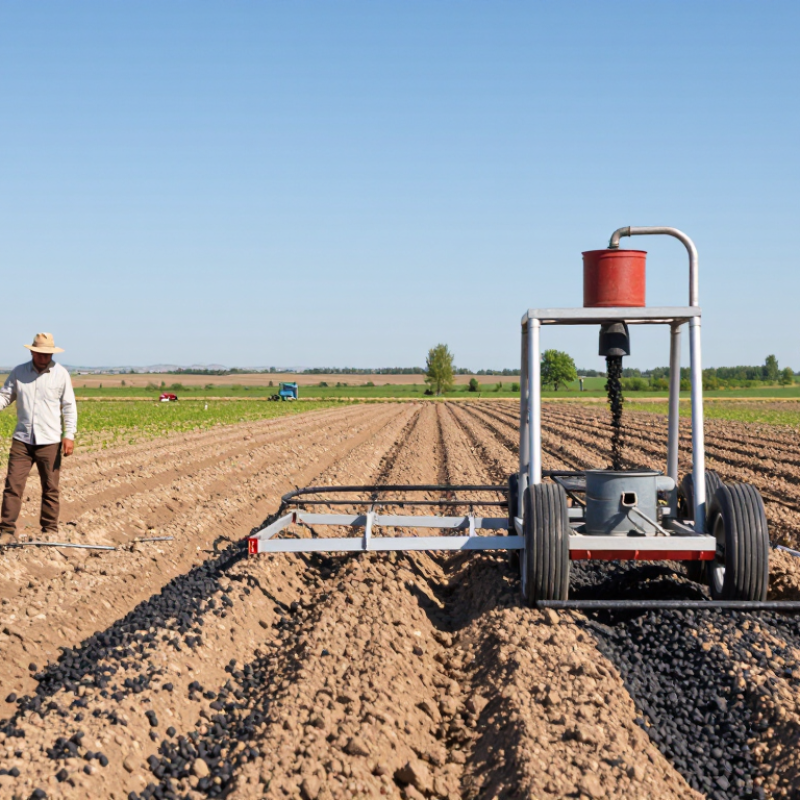
Potassium humate is used in crop fields, orchards, nurseries, and protected horticulture. In open fields, growers commonly place it near the seed row or incorporate it into the root zone before planting. In orchards, it can be applied beneath the tree canopy, where feeder roots take up water and nutrients. For drip-irrigated vegetables, soluble products may be delivered through fertigation.

Check compatibility first: concentrated mixtures can clog equipment or form deposits.

Seed and transplant treatments are other uses, though results depend on the crop, product, and growing conditions. A meta-analysis by Rose et al. in Frontiers in Plant Science (2014) reported average increases of 22% in shoot dry weight and 21% in root dry weight after humic-substance applications.

These are study averages, not promised field gains. Not everywhere. Soil tests and small plot trials help growers judge whether a treatment fits their soil and crop.

Potassium humate is not a substitute for balanced fertilizer or sound irrigation. Foliar use may suit some programs, but check crop guidance and product directions before spraying. Test first.

What Affects Its Performance in the Field

Potassium humate is used in agriculture as a source of humic substances and potassium, but field results depend on more than the product name. Humic Acid Potassium Salt may support root growth and nutrient availability; its actual contribution depends on composition, dose, and soil conditions. A 2014 meta-analysis by Rose and colleagues, published in Advances in Agronomy, reported average increases of 22% in shoot dry weight and 21% in root dry weight across the studies reviewed. Those are averages, not guarantees. Responses varied with crop, humic material, and application rate.

Soil pH, texture, organic matter, and moisture all influence performance. A sandy bed under drip irrigation may respond differently from clay soil that stays wet after rain. Potassium status matters too: adding more is not automatically helpful when a soil test already shows adequate potassium. Check the product’s analysis, then compare treated and untreated strips under the same conditions. Small differences matter. Keep irrigation timing and fertilizer rates consistent, and record crop growth and yield. Results can be messy; weather and uneven soil often complicate comparisons. A single good harvest is not proof that potassium humate caused the improvement.

High-Purity Sodium Humate for Soil and Feed: Insights from FAO’s *The State of Food and Agriculture 2023*

As highlighted by FAO’s *The State of Food and Agriculture 2023*, building resilient agrifood systems requires more efficient use of natural resources, healthier soils, and practical solutions that support sustainable production. High-purity sodium humate can contribute to these goals as an organic, water-soluble soil amendment derived from natural leonardite. Rich in humic substances, it helps improve soil structure, support moisture retention, and promote the availability and uptake of essential nutrients, creating more favorable conditions for strong and uniform plant growth.

When applied according to crop needs and soil conditions, sodium humate may help farmers make better use of fertilizers while supporting long-term soil fertility. Its soluble powder form is convenient for blending with irrigation water, foliar applications, or compatible agricultural inputs. This flexibility makes it suitable for farms seeking to improve productivity while reducing unnecessary resource losses and maintaining environmentally responsible practices.

Sodium humate also has potential value in livestock and aquaculture feed programs. Used as a functional feed ingredient within balanced formulations, it can support nutrient utilization and feed efficiency, helping producers manage feeding costs and resource consumption. Sourced from a reliable factory in China, this high-purity material offers a practical option for agricultural operations focused on soil improvement, responsible animal production, and more sustainable food systems.

FAQS

Where is potassium humate used in agriculture?

It is used in crop fields, orchards, nurseries, and protected horticulture. In orchards, growers may apply it beneath tree canopies, near feeder roots.

How can growers apply it before planting?

It may be placed near seed rows or incorporated into the root zone. Small plot trials can show whether it fits a particular crop and soil.

Can soluble forms be used with drip irrigation?

They may be delivered through fertigation. Check compatibility first; concentrated mixtures can clog equipment or leave deposits. Test first.

Does potassium humate guarantee stronger crop growth?

No. A 2014 meta-analysis reported average increases of 22% in shoot dry weight and 21% in root dry weight. These were study averages, not promised field gains.

What affects its performance in the field?

Soil pH, texture, organic matter, moisture, potassium status, product composition, and application rate all matter. A sandy bed under drip irrigation may respond differently from wet clay.

Should growers apply extra potassium when soil levels are already adequate?

Not automatically. Soil testing can help guide the decision. More is not always better.

How can growers assess whether a treatment helped?

Compare treated and untreated strips under the same conditions. Keep irrigation timing and fertilizer rates consistent, then record growth and yield. Weather can muddy the comparison.

Can potassium humate replace balanced fertilizer or sound irrigation?

No. It is not a substitute for either. Foliar use may suit some programs, but check crop guidance and product directions. One good harvest alone proves little.

Conclusion

Potassium Humate is a potassium-rich form of humic substances used to support soil and plant health. In the soil, it can improve structure and help soil retain moisture and nutrients, while interacting with minerals and organic matter. These effects may make certain nutrients more available for plant uptake, helping plants use the resources already present in the soil more efficiently.

By supporting a healthier root environment, Potassium Humate may encourage root growth and contribute to steady plant development. It is used in a range of agricultural settings, including crop production and soil management, and may be applied in different ways depending on the growing system. Its performance in the field can vary with soil type, crop, application rate and timing, weather, and existing nutrient conditions, so results depend on how well its use fits local needs.


Clara

Clara

Clara is a dedicated marketing professional with extensive knowledge of specialized disinfectants and bleaching agents, including calcium hypochlorite and trichloroisocyanuric acid. With years of experience in the industry, she has not only embraced her role as a marketer but also as an artisan who......
Previous 2026 Best Textile Finishing Agent Types for Global Buyers?