



Leave Your Message
From Cleaning Chemical to Production Stability: Caustic Soda Finds a New Role in the Circular Packaging Industry
Industry News

From Cleaning Chemical to Production Stability: Caustic Soda Finds a New Role in the Circular Packaging Industry

2026-09-03
As the food, beverage, and household-product industries continue to expand their use of recyclable packaging systems, the cleaning and reprocessing of returnable glass bottles is becoming an increasingly important industrial process.

Unlike single-use packaging, returnable glass bottles are collected, sorted, cleaned, inspected, and refilled. During this cycle, bottles may retain beverage residues, organic substances, label adhesives, and other materials that cannot always be removed through simple rinsing.

Maintaining an effective cleaning process without damaging the bottles or disrupting production has therefore become an important concern.

This is where a familiar industrial chemical continues to play a valuable role: caustic soda.

Caustic soda is certainly not a new product. Its use in the circular packaging industry, however, reflects a broader trend: well-established chemical materials are being integrated into increasingly sophisticated industrial production systems.

Circular Packaging Is Raising the Standard for Industrial Cleaning

For large beverage and food manufacturers, glass bottles are not necessarily used only once.

After collection, bottles need to enter a cleaning system where residues, labels, adhesives, and other contaminants are removed before inspection and refilling.

As a result, modern bottle-cleaning systems need to achieve more than simply making bottles clean.

Cleaning-solution stability, contaminant removal, equipment operation, and wastewater management all need to be considered as part of the overall process.

Because of its strong alkaline properties, Sodium Hydroxide can play an important role in selected industrial cleaning processes, particularly where organic residues and certain adhesive materials need to be addressed.

For buyers, this means the value of caustic soda cannot be judged simply by price.

If raw-material quality varies significantly between batches, it may create additional uncertainty in solution preparation, equipment operation, and production management. Consistent quality is therefore becoming an increasingly important consideration for industrial buyers.

Why Does Product Form Matter in Industrial Procurement?

Caustic soda is available in several physical forms, including flakes, pearls, and liquid products.

Each form has different characteristics in storage, transportation, and industrial handling. For international buyers, physical form can also influence packaging requirements, shipping arrangements, and warehouse management.

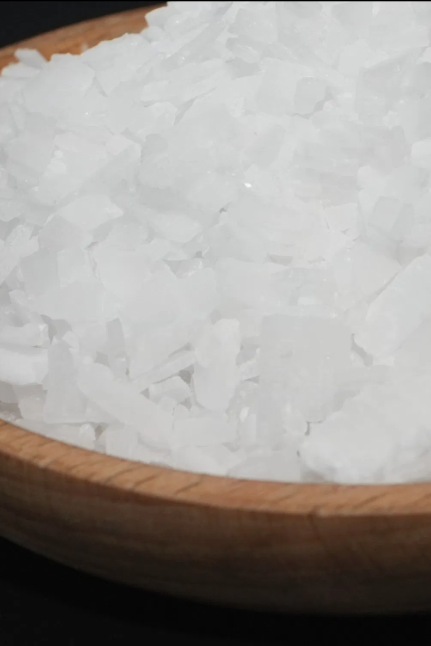
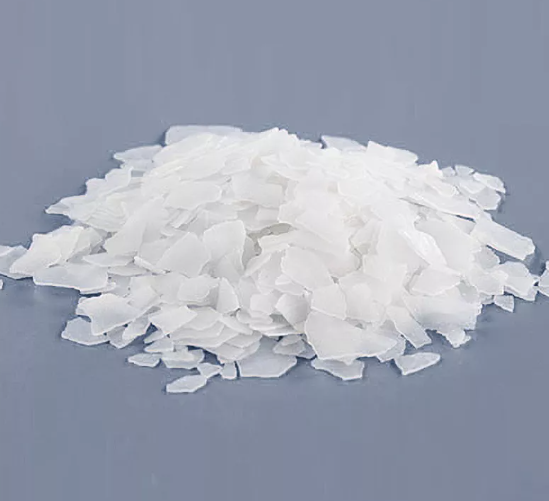
For example, Caustic Soda Flakes have a well-established position in industrial applications and can be packaged and transported efficiently. Caustic Soda Pearls, meanwhile, provide a granular form that can fit specific industrial handling and processing requirements.

For international customers, choosing between different forms is therefore not purely a technical decision.

Local storage conditions, transportation distance, production-line configuration, and chemical-handling systems can all influence the final purchasing decision.

Professional procurement is increasingly evaluating product specifications together with supply-chain considerations.

From Chemical Purchasing to Production-Continuity Purchasing

This reflects a broader change in the industrial chemicals market.

In the past, buyers often focused primarily on price and basic product content when sourcing caustic soda.

Today, large manufacturers are increasingly concerned with whether a supplier can provide consistent products over the long term.

For continuously operating production lines, chemical supply is not an isolated purchasing issue. An interruption in supply can affect cleaning operations and, ultimately, production schedules.

This is one reason Industrial Grade Caustic Soda continues to maintain stable demand across international markets.

Customers are no longer purchasing only one shipment. They are looking for reliable, continuous supply with consistent quality.

This is particularly relevant to industries such as food packaging, glass manufacturing, pulp and paper, and chemical processing, where caustic soda can be integrated into established industrial processes.

When changing suppliers, customers may therefore pay close attention to batch consistency, packaging integrity, and long-term delivery capability.

Caustic Soda Is Connecting with More Circular-Economy Applications

Returnable packaging is only one example.

As manufacturers place greater emphasis on resource recovery and material reuse, demand for industrial cleaning, separation, and pretreatment processes is also developing.

In selected pulp, textile, chemical, and recycling applications, alkaline chemicals can participate in surface treatment, removal of organic residues, or process pretreatment.

This creates an interesting development in the caustic soda market.

Although caustic soda is a highly mature basic chemical, its downstream applications continue to evolve. As new production models emerge, established chemical materials can find new roles within those processes.

The market for caustic soda is therefore influenced not only by traditional industrial demand but also by broader trends such as circular manufacturing, resource recovery, and industrial automation.

Basic Chemicals Still Need a New Market Perspective

Caustic soda has been part of industrial production for decades, making it easy to view it as a traditional product with limited room for change.

The development of returnable packaging, resource recovery, and advanced industrial cleaning tells a different story.

New production models continue to create new requirements for established chemicals, while buyers are moving beyond simple price-based purchasing toward greater attention to product consistency, supply reliability, and application compatibility.

For caustic soda suppliers, future competition will therefore involve more than manufacturing cost. Quality control, supply-chain management, and international delivery capability will become increasingly important.

For buyers, the key consideration is also moving beyond market price.

The more important question is whether the material can enter the production system consistently and support reliable long-term operation.

As more industries move toward circular manufacturing and more refined production processes, caustic soda—a long-established industrial chemical—is finding new opportunities in application areas that may once have received far less attention.

6303d2e5-8a32-4ea3-9636-6ee58198f736.png