

How Activated Carbon Is Responding to Intermittent Pollution in Modern Industry
In many industrial facilities, pollutants do not enter a treatment system at a constant rate. One of the most difficult challenges for purchasers and engineers is often the sudden increase of organic contaminants, odors, or color caused by production changes, equipment cleaning, or raw material replacement.
A wastewater system may be designed around average conditions, while the actual plant can experience short-term pollution peaks. When this happens, conventional treatment processes may face unstable performance, increased organic loading, or unexpected odor problems.
This is creating a growing role for activated carbon as a flexible treatment and buffering material.
Rather than viewing activated carbon simply as a conventional filter, engineers can consider it as an additional adsorption stage that helps reduce the impact of certain organic contaminants when water quality changes rapidly.
Moving From Average Conditions to Real-World Fluctuations
Industrial wastewater rarely remains exactly the same throughout the day.
Production schedules, raw materials, cleaning procedures, and equipment operation can all influence wastewater characteristics. A factory may have relatively stable wastewater during normal production but experience significant changes during equipment cleaning or production-line switching.
Under these circumstances, adsorption can provide an additional layer of protection.
Activated carbon contains a highly developed pore structure that allows it to adsorb certain organic compounds and other target substances. When properly selected and integrated into the treatment process, it can help reduce the impact of short-term pollution peaks and improve the stability of downstream treatment.
This makes activated carbon particularly interesting for industrial projects where wastewater characteristics change frequently.
Why Raw Material and Pore Structure Matter
When purchasing activated carbon, buyers often focus first on price, packaging, and basic specifications. However, actual treatment performance depends on much more than a single specification.
For example, Coconut Shell Activated Carbon is commonly associated with a well-developed microporous structure and can be suitable for certain applications involving smaller organic molecules and gas-phase adsorption.
However, not every wastewater project requires the same pore structure.
Engineers need to consider the target contaminants, concentration range, temperature, pH, competing organic compounds, contact conditions, and the position of the adsorption stage within the overall treatment system.
The key question is therefore not simply whether a product has a high performance indicator, but whether its adsorption characteristics match the contaminants that need to be controlled.
This is gradually changing activated carbon purchasing from simple material procurement into application-based selection.
Expanding From Water Treatment to Odor Control
Another area attracting attention is industrial odor and air purification.
Production workshops, wastewater tanks, sludge handling areas, chemical storage zones, and other industrial locations can release unwanted odors even when there is no visible pollution.
In these situations, Air Purification Carbon can serve as an adsorption medium in air treatment systems.
Instead of relying entirely on increased ventilation, adsorption focuses on capturing specific odor-causing or volatile compounds. With an appropriate filter design and replacement strategy, activated carbon can become part of a broader industrial air-quality management system.
This also creates opportunities for suppliers serving both wastewater treatment and industrial air purification markets.
Activated Carbon Is More Than a Final Filter
Activated carbon has traditionally been installed near the end of many treatment systems as a polishing stage.
However, its role can be more flexible.
Following biological treatment, activated carbon may help remove certain organic compounds that are difficult to treat through conventional biological processes. In advanced treatment systems, it can provide additional polishing before final discharge or reuse.
For facilities with changing production loads, an adsorption unit may also provide additional treatment capacity during periods of increased contaminant loading.
In this sense, the value of activated carbon does not simply come from adding more material. It comes from selecting the appropriate carbon type and integrating it into the treatment process according to actual water and air quality conditions.
From Product Specifications to Application Matching
For professional buyers, the most important factor in activated carbon procurement is increasingly becoming application compatibility.
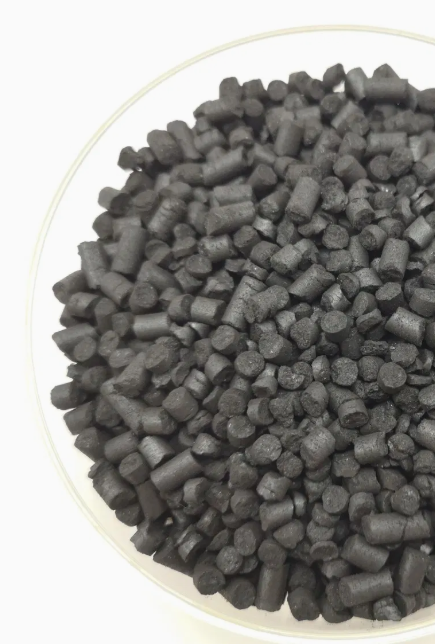
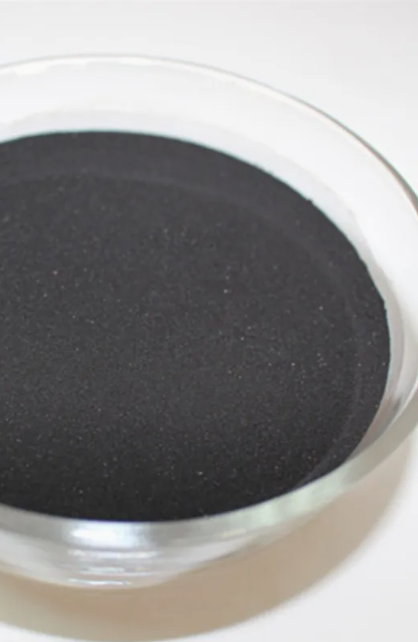
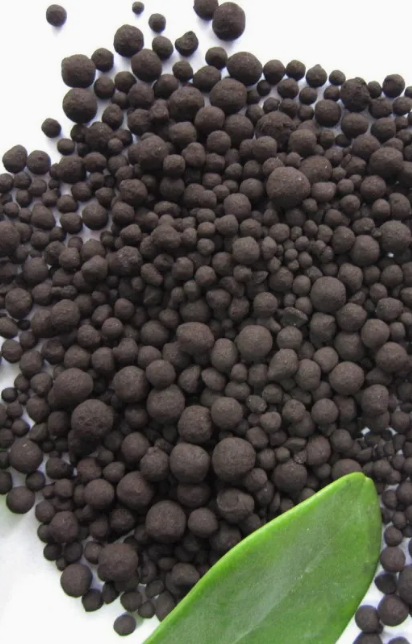
Granular Activated Carbon can be suitable for fixed-bed or continuous treatment systems, while Powdered Activated Carbon may be used in processes where carbon is introduced directly into a treatment stage and subsequently separated.
At the same time, High Iodine Value is an important performance indicator for certain activated carbon applications, but it should not be treated as the only criterion for product selection.
Different contaminants require different adsorption characteristics. Molecular size, concentration, competing substances, contact time, and operating conditions can all influence actual performance.
As industrial wastewater and air-treatment requirements become more complex, activated carbon is moving beyond its traditional role as a simple filtration material. Its applications are expanding into advanced wastewater treatment, odor control, air purification, and treatment systems designed to handle fluctuating pollution loads.
For purchasers and engineering companies, this creates a stronger need for activated carbon products that are selected according to the specific application rather than simply according to a general specification.
The future of activated carbon procurement is therefore increasingly centered on one principle: matching the carbon to the contaminant, the process, and the real operating conditions.