




How to Calculate the Dosage of Calcium Hypochlorite for Industrial Wastewater Treatment: A Complete Guide for Engineers
In industrial wastewater treatment, maintaining strict control over effluent quality while managing operational costs is a daily challenge for chemical engineers and plant managers. Among the various disinfectants available, Calcium Hypochlorite remains a global standard due to its high available chlorine content, stable shelf life, and powerful oxidizing capabilities. However, one of the most frequent technical support questions we receive is: “How do we precisely calculate the dosage to avoid both under-treating and chemical waste?”Over-dosing dramatically inflates your chemical procurement costs and can lead to toxic chlorine levels in discharged water. Under-dosing, on the other hand, results in compliance failures and regulatory penalties.
This comprehensive guide breaks down the practical calculation formulas, critical variables, and compliance standards you need to master for effective wastewater disinfection.
1. Core Variables: Key Factors Determining Your Dosage
Before starting the calculations, your engineering team needs to determine three key baseline metrics:
- Wastewater Flow Rate: The total amount of wastewater flowing through the treatment system daily or hourly (usually expressed in cubic meters or liters).
- Chlorine Requirement: The amount of chlorine consumed by organic matter, metal ions (such as iron and manganese), and impurities like ammonia nitrogen in the water before the disinfection reaction occurs.
- Target Residual Chlorine: The amount of free chlorine that must remain in the water after sufficient contact reaction to ensure complete elimination of microorganisms and compliance with local environmental discharge standards (usually 0.5 mg to 2.0 mg per liter).
Basic Rule of Dosing: Your total chlorine dosage should equal the wastewater's initial chlorine requirement plus the target residual chlorine level that needs to be met.
2. Case Study: The Logic of Routine Calculations for Calcium Hypochlorite Dosage
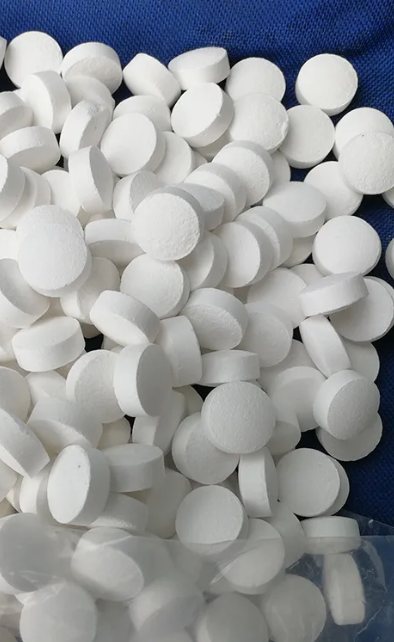
Since calcium hypochlorite is a solid chemical (typically with an available chlorine content of 65% or 70%), not 100% pure liquid chlorine, the actual purity standard of the product must be factored into the calculations.Let's look at a real-world factory example:
Suppose your industrial facility needs to treat 500 cubic meters of wastewater per day. Through beaker stirring tests, your laboratory determines that the total dosage concentration needs to reach 10 mg/L to meet the chlorine requirement and achieve the target residual chlorine standard. You are using standard 65% granular calcium hypochlorite supplied by Kemdon.
Step 1: Calculate the Total Required Pure Chlorine. 500 cubic meters is equivalent to 500,000 liters of water. If each liter of water requires 10 mg of chlorine, then the entire tank requires a total of 5 million mg of pure chlorine, which translates to 5 kg of pure chlorine.
Step 2: Calculate based on product purity. Since the calcium hypochlorite you are using has an available chlorine content of 65%, this means that every 1 kg of product contains only 0.65 kg of pure chlorine. To obtain 5 kg of pure chlorine, we need to divide 5 kg by 0.65, resulting in an actual product requirement of approximately 7.69 kg.
Therefore, your factory needs to add approximately 7.69 kg of 65% calcium hypochlorite granules to the system daily.
3. Operational Pain Points: Dissolution and Dosing Techniques
Completing logical calculations on paper is only the first step. In actual operation, chemical engineers often encounter technical bottlenecks in the physical dosing stage of the product.
Avoiding Dosing Pump Clogging
To achieve automated system operation, calcium hypochlorite granules typically need to be dissolved in a preparation tank to prepare a liquid stock solution (concentration usually 1% to 5%).
- Potential Problem: Calcium hypochlorite naturally produces a small amount of water-insoluble calcium residue during dissolution. If dosing is done directly from the bottom of the tank, this residue will quickly wear down and clog the mechanical metering pump.
- Solution: Always use a preparation tank with a floating suction valve (to prevent the suction of bottom sediment), or allow the solution to settle completely for 30 minutes before dosing, introducing only the clear liquid from the top into the dosing line.
4. Global Market Trends and Compliance Standards (EPA/NSF)
The procurement of water treatment chemicals is subject to strict scrutiny by international regulatory agencies. When importing and using calcium hypochlorite, your compliance team must closely monitor the following two core pillars:
Environmental and Safety Certification: For any wastewater treatment plant that ultimately discharges into public water bodies or enters a recycling system, the chemicals used must be free of heavy metal contamination.
- Ensure your suppliers can provide batch testing reports that comply with EPA (Environmental Protection Agency) standards or NSF/ANSI Standard 60 (Certification of Drinking Water Treatment Chemicals). This ensures that harmful heavy metal impurities such as arsenic, lead, and cadmium do not accidentally contaminate your effluent.
Maritime Logistics Compliance (IMDG Dangerous Goods Code): Calcium hypochlorite is classified as a Group 5.1 oxidant (UN 2880). According to the latest International Maritime Dangerous Goods Code (IMDG), its transport requirements are extremely stringent:
- It must be packaged in tightly sealed, UN (United Nations) certified plastic drums.
- During sea transport, it must be stored in a hold away from direct heat sources and organic chemicals to prevent thermal decomposition reactions.
Conclusion: Optimize Your Treatment Efficiency with Kemdon
Accurate dosage calculation protects your operational budget, extends the lifespan of your mechanical dosing systems, and guarantees 100% compliance with local environmental protection agencies.
At Kemdon (
Do you need to optimize your wastewater treatment setup or request a bulk quotation? Visit our engineering and sales hub at