



Potassium Humate: A Key Force Leading the Transformation of Modern Agriculture Toward Sustainability and Efficiency
As global agriculture faces the multi-faceted challenges of land degradation, climatic variability, and food security, the innovation of agricultural inputs has become an absolute necessity. As the essence of mineral-based organic matter, Potassium Humate is evolving from a simple fertilizer additive into a core component of modern precision agriculture, thanks to its exceptional multi-functionality.
From a biochemical perspective, this substance is far more than just a potassium fertilizer. As a potent Plant Growth Stimulant, it contains active functional groups—such as carboxyl and phenolic hydroxyl groups—that can chelate with trace elements in the soil. This interaction not only protects nutrients from being fixed in the soil but also greatly promotes both the vertical deepening and horizontal expansion of plant root systems. Research indicates that after application, the rate of cell division in crops accelerates, and chlorophyll content significantly increases, leading directly to enhanced terminal yields and optimized quality.
Environmental sustainability is at the heart of modern farming. Due to a long-term over-reliance on synthetic NPK (Nitrogen, Phosphorus, Potassium), vast areas of global farmland have experienced pH imbalances and the degradation of microbial communities. Potassium Humate, acting as a natural Soil Conditioner, utilizes its massive Cation Exchange Capacity (CEC) to act as a "buffer," regulating soil pH levels. It promotes the formation of soil aggregate structures and improves soil permeability, reviving compacted land and turning "dead soil" back into "living soil."
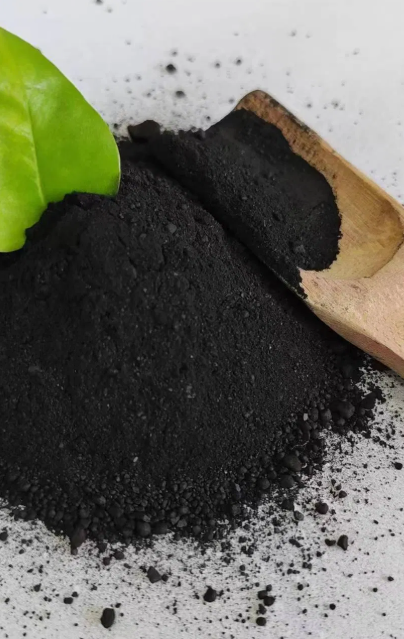
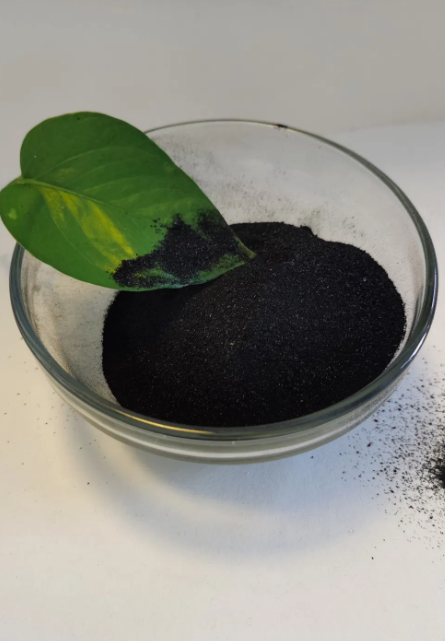
In response to the rapidly developing facility agriculture and smart irrigation sectors, high-purity Soluble Potassium Humate has demonstrated superior compatibility. Its characteristics—low molecular weight, rapid dissolution, and zero sediment—solve the clogging issues that most plague irrigation systems. This highly permeable substance can travel with water directly to the crop roots, achieving precision nourishment.
In the future landscape of agriculture, the combined application of Organic Fertilizer and inorganic fertilizers is the key to achieving "reduction and efficiency enhancement." Integrating this mineral essence into the fertilization system not only reduces the pollution of groundwater by chemical fertilizers but also builds a healthier agricultural ecosystem by enhancing crop resistance to drought, cold, and disease, thereby reducing the need for chemical pesticides.