



The Hidden Linchpin of the Bulk Agrochemical Supply Chain: Evaluating the Commercial Value of High-Performance Potassium Humate for Fertilizer Formulation and Soil Management
In the global landscape of modern sustainable development and precision agriculture, the procurement of bulk agricultural inputs has evolved far beyond the simplistic logic of price controls. For international buyers, large-scale fertilizer manufacturers, and agronomic engineers, the inherent quality of raw materials dictates the market competitiveness and actual field performance of the final commercial products. Universally recognized as an exceptionally effective Plant Growth Stimulant, potassium humate plays an critical role in boosting crop stress tolerance, accelerating root architecture development, and optimizing fertilizer utilization efficiency.
However, in the global supply marketplace, the quality of available potassium humate remains highly fragmented. Procurement managers and technical engineers routinely encounter operational bottlenecks: unexpected precipitation and phase separation during blending, frequent physical clogging in high-performance micro-irrigation lines, and inconsistent product bio-activity leading to terminal complaints from growers. This comprehensive report deconstructs the evaluation and selection of high-performance potassium humate for demanding industrial and agricultural deployments from the critical standpoints of technical performance, field application challenges, and supply chain rationalization.
1. Technical Pain Points for Agronomic Engineers: Solubility, Hard-Water Tolerance, and Formulation Compatibility
For agronomic engineers tasked with the formulation of liquid fertilizers or the upkeep of modern large-scale irrigation systems, the physical and chemical stability of raw materials is the first and most definitive technical bottleneck. Standard-grade humic products, resulting from unrefined industrial extraction processes, frequently retain high concentrations of raw matrix residues and high-molecular-weight insoluble matter. When these products are integrated into modern drip or micro-sprinkler systems, their microscopic particulates inevitably accumulate within nozzles and pipe elbows, causing persistent physical clogging. This significantly escalates farm equipment maintenance overheads and leads to uneven field irrigation, which triggers localized crop growth stagnation.
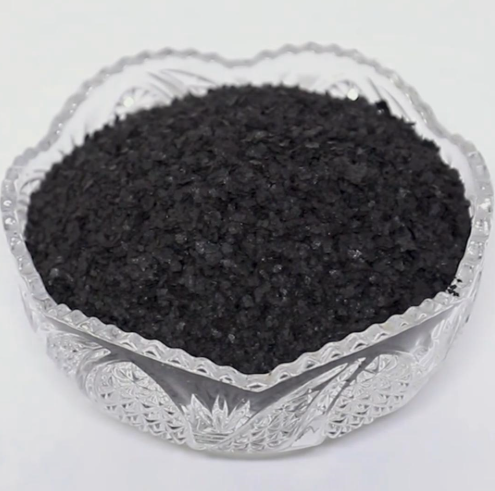
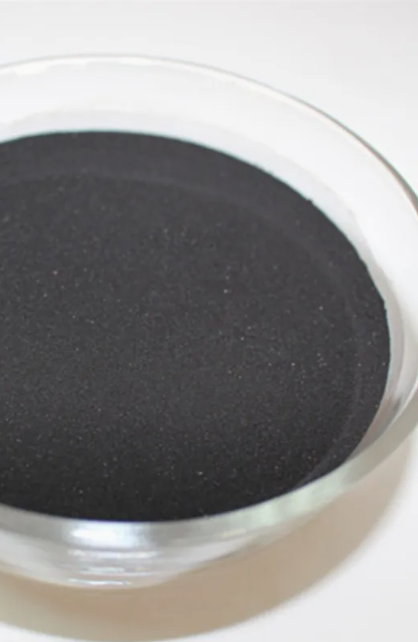
Premium Soluble Potassium Humate offers a decisive advantage in mitigating these specific operational failures. High-performance variants undergo multi-stage precision filtration and advanced centrifugal purification during synthesis, achieving a near-instantaneous dissolution velocity in aqueous media and a residue profile that approaches zero.
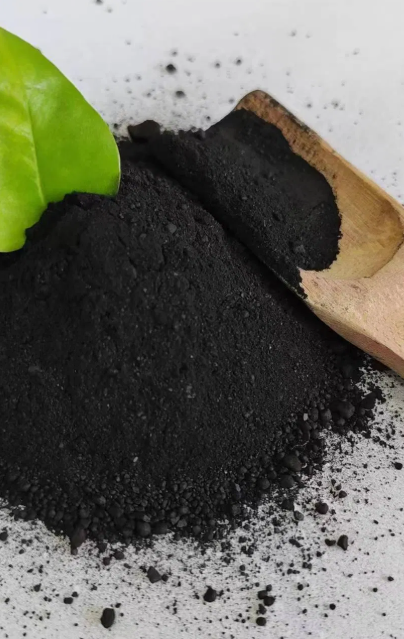
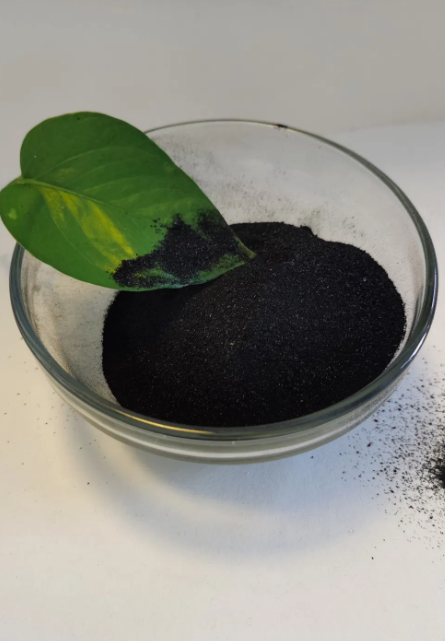
Beyond baseline solubility, the more formidable technical benchmark is hard-water resistance. In practical open-field applications, irrigation water is predominantly sourced from underground aquifers or local surface basins, which naturally contain elevated concentrations of divalent metallic ions like calcium and magnesium. Conventional potassium humate reacts aggressively with these hard-water ions, initiating rapid flocculation and sedimentation. Conversely, highly activated and structurally modified Potassium Humate Powder features a optimized spatial layout of carboxyl and hydroxyl functional groups across its molecular framework. This configuration delivers robust steric hindrance and superior chelating capacity. Even when subjected to extreme water hardness or concentrated liquid fertilizer masterbatches, it preserves outstanding mutual compatibility and fluid homogeneity, eliminating phase separation and preventing aggregation to guarantee a smooth, uniform nutrient delivery to the root zone.
2. The Buyer's Commercial Matrix: Balancing High Purity with Total Cost of Ownership (TCO)
From the strategic standpoint of procurement management, comparing products solely on ex-works per-ton pricing often leads straight into a low-cost trap. Inferior raw inputs, despite their attractive upfront pricing, are characterized by diluted active concentration and elevated impurity profiles. This deficit mandates a substantially higher dosage within the final formulation to achieve standardized agronomic efficacy. Such volume amplification directly drives up outbound logistics expenses, inflates warehouse footprint utilization, and increases secondary processing energy costs.
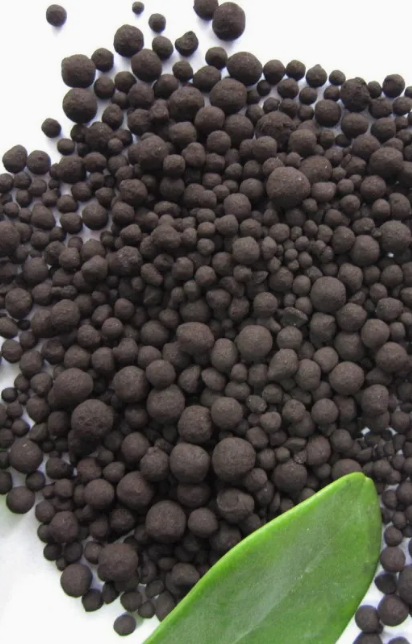
Investing in High Purity Humate represents a sophisticated commitment to optimizing the Total Cost of Ownership (TCO). High-purity inputs denote minimized inert ballast and an elevated density of bioactive molecular fractions. Whether manufacturing compound granules, water-soluble crystalline blends, or specialized foliar spray concentrates, buyers can deploy minimal inclusion rates to secure biochemical performance that exceeds historical baselines. This optimization drastically lowers the comprehensive manufacturing cost per ton of finished fertilizer while generating substantial efficiencies in packaging and shipping turnarounds.
Furthermore, high purity provides unmatched quality consistency. In cross-border maritime trade, where extended transit timelines expose cargo to severe fluctuations in ambient temperature and humidity, low-grade humic materials are highly susceptible to moisture absorption, caking, and chemical degradation. Premium-spec raw materials, defined by rigorous physical and chemical benchmarks, possess extended shelf lives and resilient environmental tolerance, insulating enterprises against commercial liabilities arising from cargo rejections, claims, and subsequent downstream production disruptions.
3. Terminal Ecological Rewards: Long-Term ROI as a Premium Soil Modifier
The ultimate destination of any bulk fertilizer purchase is the open soil, and the final arbiters of performance are aggregate crop yield and long-term land viability. With the progressive amplification of soil compaction, secondary salinization, and micro-ecological degradation caused by decades of conventional over-fertilization, modern agriculture urgently demands inputs capable of reversing substrate degradation.
On this ecological tier, high-performance potassium humate functions not merely as a nutrient booster but as an elite Soil Conditioner. Empowered by highly active colloidal properties, it integrates into the soil matrix to accelerate the synthesis of stable soil aggregate structures, thereby significantly enhancing macroscopic aeration and water permeability. In coarse sandy tracts, it dramatically bolsters moisture and nutrient retention capacity, preventing leaching losses; in dense clay or salt-affected matrices, it utilizes advanced ion exchange and buffering dynamics to modulate localized soil pH, reducing the phytotoxic impacts of free sodium and chloride ions on vulnerable root structures.
This deep remediation of the root-zone micro-environment provides sustained commercial and ecological dividends. It enables commercial growers to optimize crop yield and produce quality while rationalizing synthetic chemical inputs, establishing a virtuous production cycle that drives exceptional terminal brand loyalty for fertilizer blenders.
4. Supply Chain Compliance and Sustainability Assurance
Under the contemporary regime of tightening international environmental protocols and cross-border trade regulations, regulatory compliance has transitioned into a absolute baseline for enterprise survival. Modern buyers inspect more than just physical certificates; they demand verifiable compliance regarding environmental footprints, heavy metal tolerances, and upstream supply chain resilience.
Positioned as a trusted global partner, Qingdao Kemdon is systematically aligned with the exacting protocols of the world's leading agrochemical procurement enterprises. Our advanced production facilities feature full-cycle digital process architecture and standardized manufacturing controls. Every phase—from raw material selection to advanced extraction, purification, and multi-stage drying—is validated by sophisticated analytical instruments. We guarantee that every shipment demonstrates unwavering consistency in purity, solubility, and hard-water resilience, while keeping heavy metals such as lead, cadmium, and arsenic well below the most stringent international safety limits. Aligning with us means securing your corporate supply chain against external vulnerabilities and activating a powerful catalyst for the global transition toward sustainable agriculture.